
One framework, one workflow, many communities: Freiburg Galaxy team at EOSC Symposium 2025
Galaxy showed how 'one framework, one workflow, many communities' can run cross-disciplinary imaging analyses on the emerging EOSC Federation. Here is what we presented, with slides and video.
At EOSC Symposium 2025 in Brussels, Björn Grüning demonstrated a scientific use case powered by Galaxy on federated European infrastructure: processing massive imaging datasets with reusable workflows that work across domains, from astrophysics to climate and marine science, and into the life sciences. The demo highlighted how authenticated access, interoperable services, and portable workflows accelerate discovery once nodes interconnect.
Björn’s opening slide set the tone: “One framework, One workflow, Many communities.” That message underpins our approach—shared, FAIR methods delivered through a familiar analysis environment so researchers can reproduce, adapt, and reuse without re-implementing the stack.
The video shown on stage compresses the idea into practice: a single workflow template orchestrates data access, compute, and visualization across EOSC resources, while Galaxy provides the user-level glue. The result is repeatable imaging analysis that scales with the Federation rather than with a single site.
The core idea is portability; Galaxy workflows encapsulate methods once and could travel to where data and compute live. In the demo, a pipeline supports object segmentation and classification across disciplines; parameters change, but provenance, identifiers, reuse stay consistent through the Galaxy interface and EOSC services.
Why this matters now? With the EOSC Federation moving into operations and the first wave of Nodes signing an MoU, demonstrations that cross institutional boundaries are no longer aspirational but rather they are operational and measurable. Galaxy’s role is the “one workflow” layer that rides on top of EOSC-AAI, storage, and compute, translating federation into day-to-day research practice.
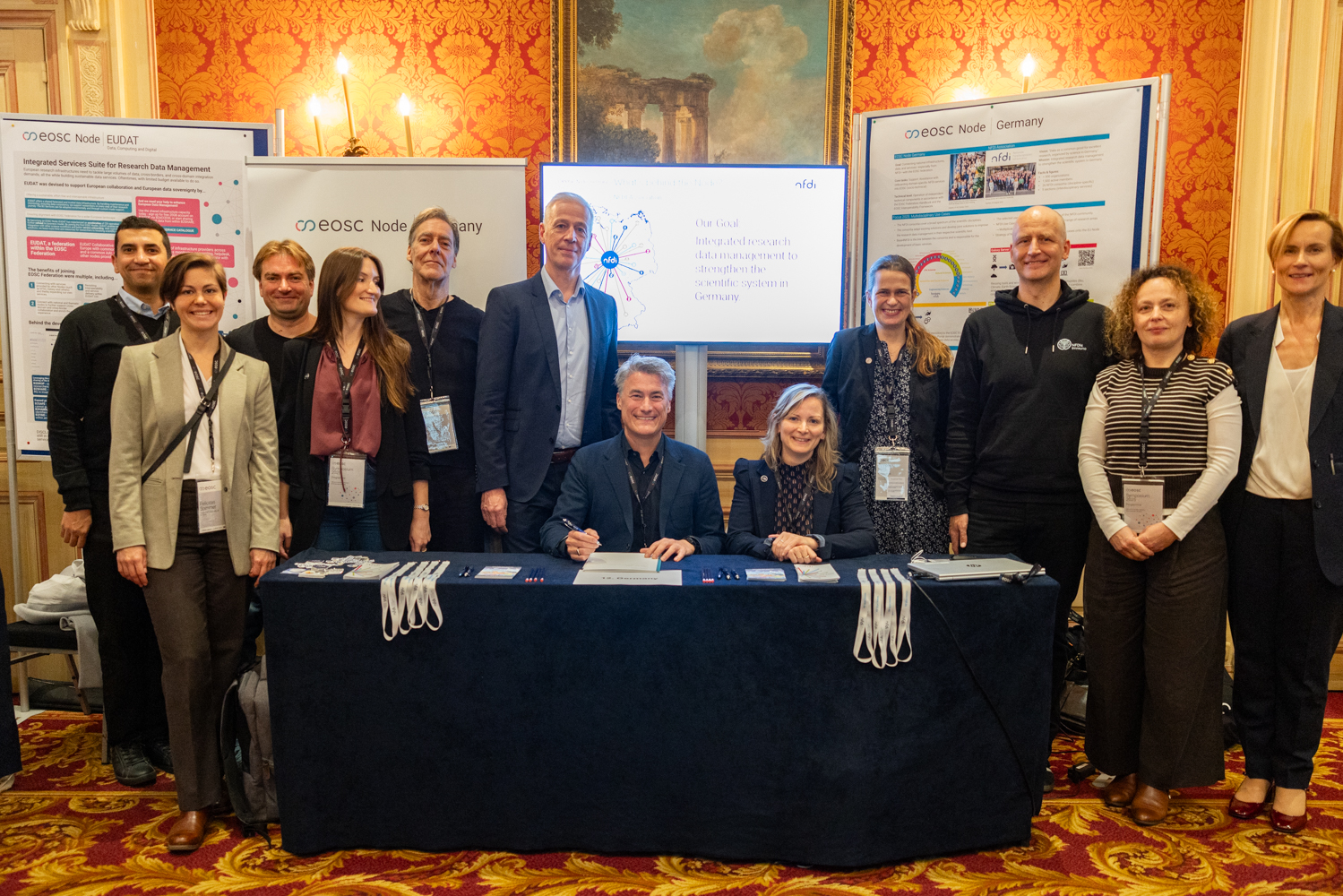
Björn also contributed to the breakout on onboarding to the German EOSC Node (NFDI), outlining hands-on lessons from integrating Galaxy with EOSC-AAI, running single-user instances on EEN resources, deploying Pulsar Network for distributed compute, and connecting storage options available to users. The takeaway: onboarding is feasible today with standards and coordinated support.
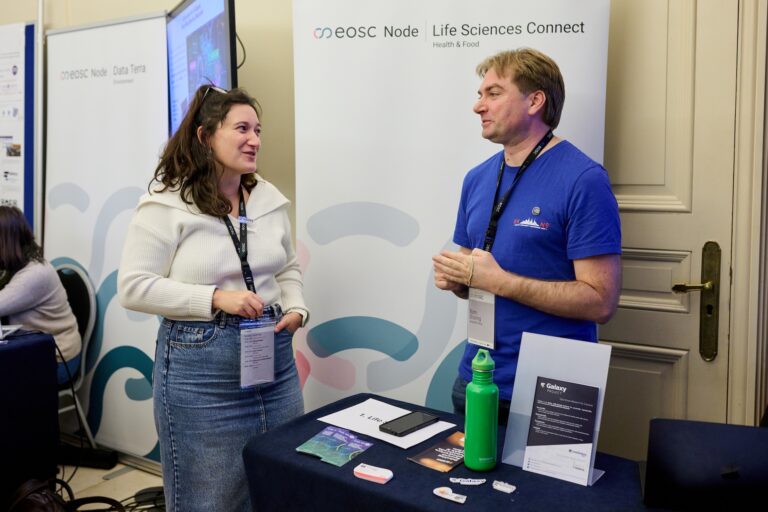
Other projects at the Symposium showcased Galaxy in their contexts as well. We will cover those talks—use cases, onboarding journeys, and results—in forthcoming posts.
Watch the video
Acknowledgement
The video represents a collaborative effort among multiple partners, with special thanks to Marie Jossé, the EGI Foundation, and Diana Chiang Jurado for their valuable contributions.